Waste Infrastructure as a Service
Turning agricultural waste into productive infrastructure.
OKIN Technologies builds and operates waste-processing infrastructure for agricultural and food-processing facilities, converting residues into valuable materials, energy and carbon assets.
- Build & deploy
- Modular infrastructure at the source of waste
- Operate
- OKIN runs processing, monitoring and maintenance
- Monetize
- Recovered outputs and eligible carbon attributes
The problem
Africa's processors have a waste infrastructure problem.
Agricultural processing creates concentrated streams of shells, husks, residues and organic waste. Many processors lack the infrastructure and capital required to process these materials efficiently.
Waste therefore becomes:
- A disposal cost
- An operational burden
- A lost revenue opportunity
- An environmental liability
Typical residue streams
- Cashew shells
- Palm-kernel shells
- Rice husks
- Groundnut shells
- Cocoa residues
- Other agricultural processing residues


Origin
We started with our own waste.
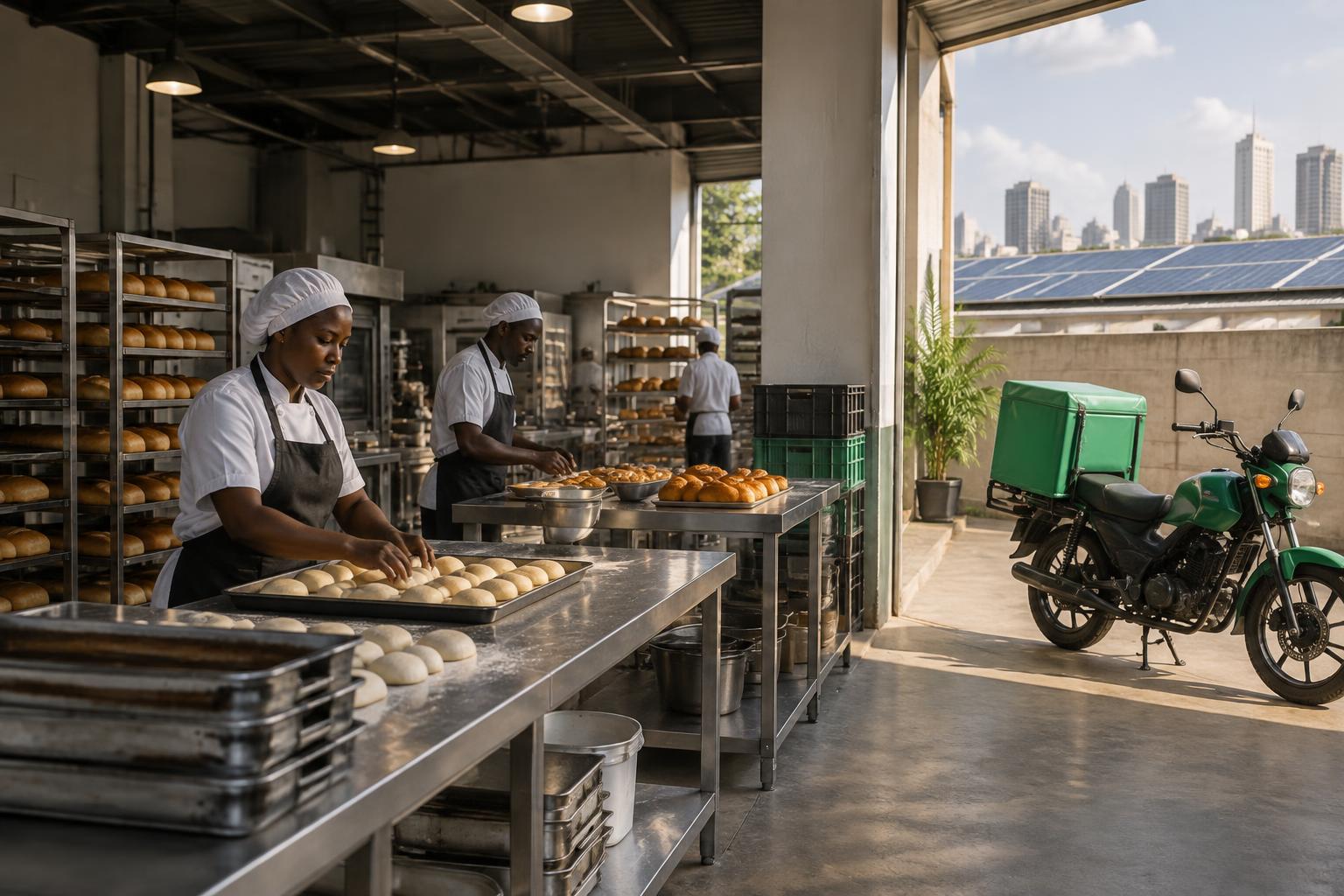
OKIN Technologies was born inside our own food-processing business. Running a real processing facility showed us the problem first-hand. We were generating agricultural residues that had limited value and required better management.
Rather than accept waste as an unavoidable cost, we began developing infrastructure to process it. That experience became the foundation for OKIN Technologies.
OKB food processing
Our own operating facility
Waste generated
Recurring agricultural residues
OKIN technology developed
Built against a real constraint
Waste processed
On site, at the source
Valuable outputs
Materials, energy, carbon data
Infrastructure deployed to other processors
The model we now take to market
The model
Waste Infrastructure as a Service
Processors should not have to become waste-processing companies. OKIN provides the infrastructure, technology and operations.
Assess
We analyse your waste stream, volume, composition and processing requirements.
Deploy
We install modular processing infrastructure at or near the source of waste.
Operate
OKIN manages processing, monitoring, maintenance and operational performance.
Monetize
We commercialize recovered products and eligible environmental attributes.
The value flow
The customer provides access to its waste stream and site. OKIN operates the infrastructure and monetizes the resulting outputs.
Agricultural processor
Agricultural waste
OKIN infrastructure
Processing
Biochar, energy, materials, carbon assets
Revenue
Shared economic value
Technology
Starting with pyrolysis. Building beyond it.
Our first technology is modular pyrolysis for suitable agricultural residues.
Pyrolysis thermally converts suitable biomass in a controlled, low-oxygen environment. The process produces carbon-rich biochar while also creating opportunities for heat and energy recovery.
OKIN intends to expand its technology platform into additional waste-processing technologies as economics and feedstock characteristics require.
Process
Agricultural residue
Feedstock preparation
Modular pyrolysis
Biochar
Heat / energy recovery
Carbon data
Economics
From disposal cost to productive asset.
Project economics depend on facility, feedstock and market conditions. Figures from our own pilot operations will be published as they are validated.
Before OKIN
Waste generated
Storage
Disposal
Cost
Environmental burden
With OKIN
Waste generated
OKIN infrastructure
Processing
Valuable outputs
Potential carbon value
New revenue stream
Who we serve
Built for processors with concentrated waste streams.
Suitability of the waste stream is assessed before any deployment.
Cashew processors
Shelling and roasting lines produce concentrated shell volumes at a single point of collection.
Assessed before deployment.
Palm processors
Kernel shells and fibre accumulate continuously alongside milling operations.
Assessed before deployment.
Rice mills
Husk is generated in predictable proportion to milled output, often stockpiled on site.
Assessed before deployment.
Groundnut processors
Shelling generates a dry, uniform residue stream well suited to thermal processing.
Assessed before deployment.
Cocoa processors
Pod and husk residues create seasonal volumes that need structured handling.
Assessed before deployment.
Food manufacturers
Mixed organic by-products from production lines require assessment for suitable routes.
Assessed before deployment.
Sawmills
Offcuts, sawdust and wood residues are consistent, concentrated and often under-utilised.
Assessed before deployment.
Other agricultural processors
Any facility producing a concentrated, recurring organic residue stream is worth assessing.
Assessed before deployment.
Business model
Infrastructure without the infrastructure burden.
OKIN's model is designed to reduce the upfront capital and operational burden on processors. The processor contributes the waste stream and site access; OKIN contributes the capital, technology and operating team.
The exact commercial structure depends on the facility, feedstock and project economics.
Potential revenue streams
- Waste-management service fees
- Recovered material sales
- Biochar sales
- Energy recovery
- Carbon-removal revenue
- Infrastructure partnerships
Carbon-removal revenue is not guaranteed and depends on eligibility under applicable standards.
Carbon and climate
Better waste management can create measurable climate value.
Suitable biomass converted through controlled processes such as pyrolysis can create stable carbon-rich material. OKIN builds measurement, reporting and verification into its operations from the start.
Where projects meet applicable standards and methodologies, OKIN intends to quantify and monetize eligible carbon-removal outcomes.

Our first facility
Built from a real operating problem.
Our own processing operations give us a real-world environment to test feedstocks, equipment, operating procedures, economics and measurement systems before deploying the model to third-party processors.
—
Annual waste processed
Pilot metric
—
Biochar produced
Pilot metric
—
Waste diverted
Pilot metric
—
Processing cost reduction
Pilot metric
—
Carbon removal potential
Pilot metric
Pilot metrics will be published once measured and verified in our own operations. No figures are estimated or modelled here.
Roadmap
From one facility to a regional network.
Own-facility validation
Validate technology, feedstock economics and the operating model inside our own processing operation.
Commercial pilots
Deploy at selected agricultural processing facilities in Nigeria.
Infrastructure network
Build a network of distributed waste-processing assets across major agricultural processing clusters.
West Africa
Expand the infrastructure network across West Africa.
Why OKIN
Built by operators, not observers.
We operate a food-processing business.
We understand agricultural supply chains.
We encounter the waste problem ourselves.
We are developing from real operational experience.
We combine food processing, technology and infrastructure.
We start with concentrated waste streams where economics are strongest.
Have an agricultural waste stream?
Tell us what you're producing, how much waste you generate and where your facility is located. Our team will assess whether an OKIN system could work for your operation.